Organisation committee

Dr. Edwin van Leeuwen
contact: e.j.c.vanleeuwen@uu.nl
Dr. Edwin van Leeuwen is a comparative psychologist with a deep interest in exploring cultural phenomena through an evolutionary lens. His research primarily centres on the semi-wild chimpanzees at the Chimfunshi Wildlife Orphanage Trust in Zambia, where he conducts group-level experiments on social learning and cumulative culture, and leads the Research Advisory Board. As an assistant-professor in the Animal Behaviour & Cognition group at Utrecht University, he also heads the Primate Culture Origins Group (PRICOG), which uses observational, experimental, and technological approaches to better understand the cultural complexities of our closest living relatives.
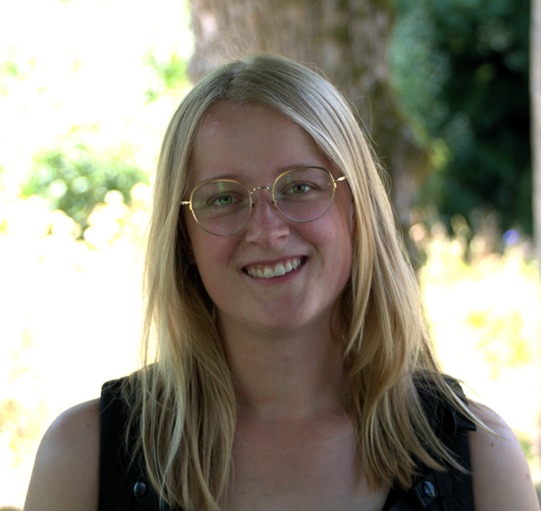
Lotte Koot
contact: l.l.koot@uu.nl
Lotte is a PhD candidate from the Primate Culture Origins Group (PRICOG). Her research focuses on the foundations of cumulative cultural evolution in non-human primates, with particular attention to the motivational and contextual factors that shape social learning in chimpanzees (Pan troglodytes). By using naturalistic experiments in both sanctuary and zoo-housed populations, her work explores the social and environmental conditions that enable or hinder cumulative culture, offering insight into the evolutionary roots of culture in our lineage.
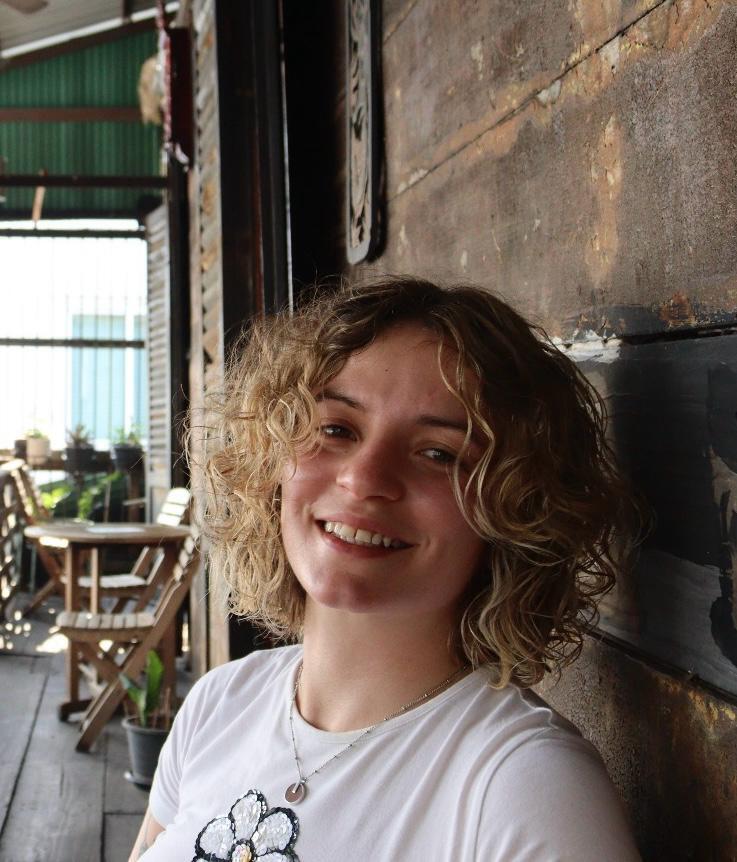
Lou Savigny
contact: l.i.savigny@uu.nl
Lou is a PhD candidate from the Primate Culture Origins Group (PRICOG). Her research centers on social learning and cultural evolution in non-human primates, with a particular focus on bonobos. Combining group experiments with naturalistic observations, Lou investigates how bonobos acquire and spread novel behaviors within their groups. This work seeks to uncover how the social fabric of bonobo societies supports or constrains the emergence, maintenance, and potential accumulation of cultural traits. Ultimately, she aspires to explore how socio-ecological dimensions modulate social learning and drive variation in cultural expression across groups and species.

Dr. Jake Brooker
contact: j.s.brooker@uu.nl
Jake is a postdoc currently working with both the Comparative Cognition and Cross-Cultural Development Lab (C4D) at Durham University and the Primate Culture Origins Group (PRICOG) at Utrecht University. His research concerns how aspects of social structure influence the expression of socioemotional behaviours and cognition in great apes, including reassurance, social learning, and decision-making. His work has mostly been conducted with sanctuary-living bonobos and chimpanzees at Lola ya Bonobo Sanctuary and Chimfunshi Wildlife Orphanage Trust respectively.

Dr. Tim-Joshua Andres
contact: t.y.andres@uu.nl
Josh is a Postdoc from the Primate Culture Origins Group (PRICOG). His work focuses on implementing computer vision methods to extract valuable information from video data of macaque breeding groups at the Biomedical Primate Research Centre. Adapting and deploying such methods contributes to the improvement of animal welfare as well as automating long term data collection for research and colony management.

Emile Bryon
contact: e.bryon@uu.nl
Emile is a PhD candidate from the Primate Culture Origins Group (PRICOG). His research centers on non-human primate social learning and the roots of culture within the animal kingdom. Currently, he is investigating the capacities for displaying cumulative cultural evolution (CCE) in sanctuary-based chimpanzees, in partnership with the Chimfunshi Wildlife Sanctuary in Zambia and the Max Planck Institute for Evolutionary Anthropology in Leipzig, Germany. Through targeted experiments, he aims to explore the cognitive and social factors that may facilitate or constrain CCE in chimpanzees, shedding light on the evolutionary underpinnings of cultural complexity in our closest relatives.
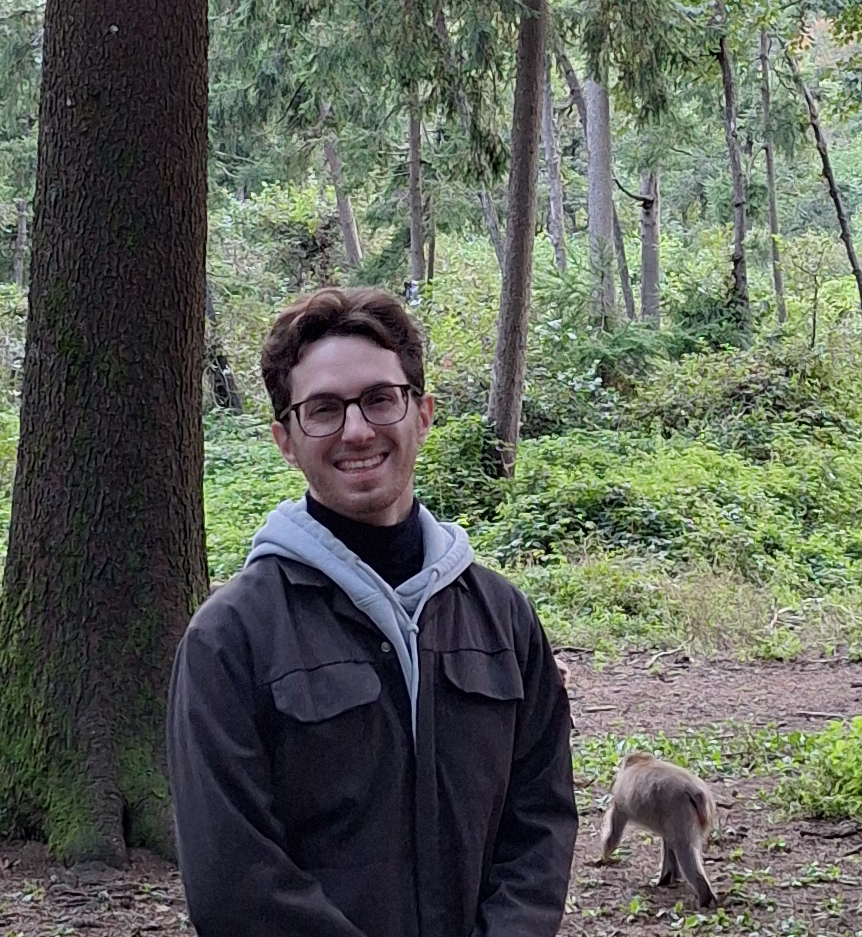
Eythan Cousin
contact: e.cousin@uu.nl
Eythan is a PhD candidate from the Primate Culture Origins Group (PRICOG). His research focuses on the interplay between culture and sociality in non-human primates. By combining behavioural experiments on social learning, social tolerance and cooperation with observations and Social Network Analysis, he investigates group-level social patterns that could be indicative of a “social culture” in captive rhesus macaques. His research takes place at the Biomedical Primate Research Center, The Netherlands, to compare groups housed in similar conditions, thus shedding light on the evolutionary roots of human’s complex sociality.
 Culture Conference 2026